
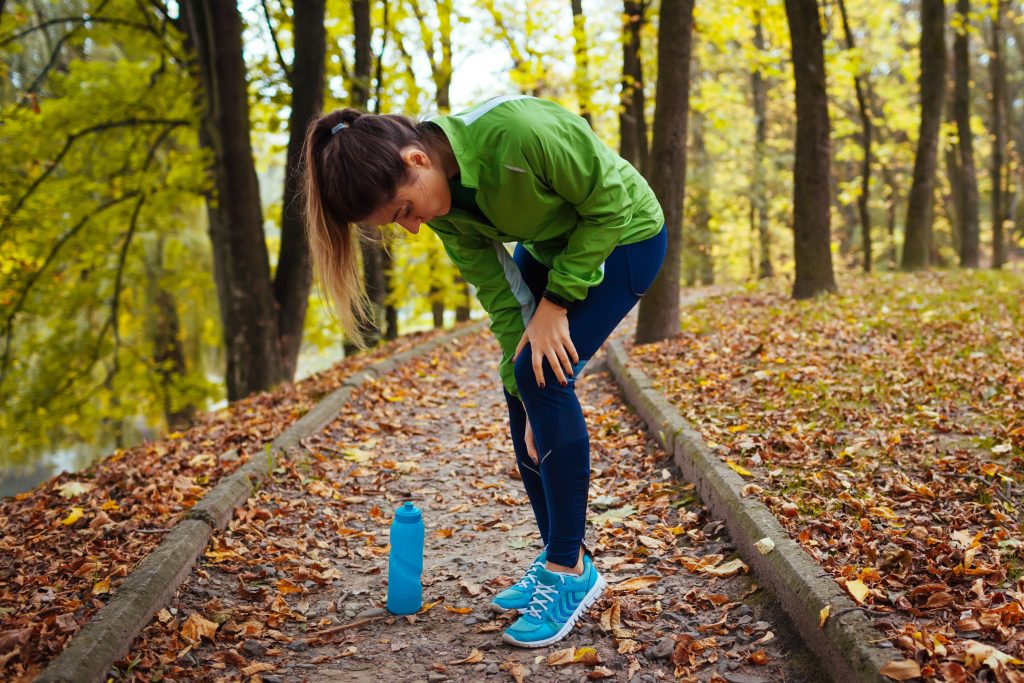
Knee pain is one of the most common complaints among runners of all experience levels. Whether it’s a small twinge that starts halfway through your route or a deep aching pain that lingers long after you’ve untied your shoes, it can affect more than your workout.
This kind of knee pain is often labeled as an overuse injury, which can make it seem like running is the root cause in itself. In reality, imbalanced muscles, inefficient biomechanics, or even worn-out shoes can make it much easier to “overuse” muscles that might otherwise be fine with your routine.
Fortunately, you can train for a better running technique, find properly fitting shoes, and strengthen your knees to enjoy a running routine built for injury prevention.
The many causes of knee pain from running
That said, not everyone will have the same approach to getting healthy knees through the right injury prevention technique. The right treatment for finally being rid of the soreness or sharp pain that’s affecting your routine depends entirely on the underlying cause of the pain.
New or returning runners
As simple as it seems, it can take a long time for your knees to build the muscles necessary to protect your knee joint from the forces at work while you run. Until then, new runners or runners returning to a routine are more susceptible to knee pain.
The timing of this can be confusing because your cardiovascular system can get stronger more quickly than your joints. This means that you might have the lung capacity to run three miles without stopping, but the stabilizing muscles around your knees might need more time to catch up. Sudden increase in load is a primary trigger for inflammation and pain.
Causes by location of pain
The location of your pain often guides a diagnosis:
- Front of the knee (kneecap pain): This type of pain is often referred to as “runner’s knee” or patellofemoral pain syndrome. Each of these terms is an umbrella term for a number of underlying conditions that will determine the best approach toward healing and strengthening the affected anatomy. Runner’s knee typically feels like a dull ache around or behind the kneecap, especially when sitting for long periods or going down stairs.
- Outer knee pain: If you feel a sharp stinging or tightness on the outside of your knee, it could be related to your IT band. When the iliotibial band becomes tight or irritated, it rubs against the thigh bone, causing inflammation.
- Inner knee pain: Pain on the medial (inner) side can sometimes point to issues with the meniscus or muscular imbalances in the hips and glutes that allow or force the knee to collapse inward as you run.
- Pain below the knee: Tenderness right below the kneecap often signals patellar tendonitis, sometimes called “Jumper’s Knee,” which stems from repetitive stress on the tendon.
External factors
Finally, if you’re able to rule out internal problems with the knee, the pain may be arising from the gear you use or the way you move.
- Running shoes: Shoes that are worn out or don’t provide the right type of support for your specific foot anatomy can alter your alignment.
- Running form: Overstriding (landing with your foot too far in front of your body) puts significant braking force on the knee joint.
- Terrain: Constantly running on hard pavement or cambered (sloped) roads can create uneven stress on your legs.
How to help runner’s knee pain
When pain flares up, people have a multitude of different reactions. Some push through the pain. Others spend a week without moving their knee at all. Both of these decisions can actually result in more pain and a more difficult healing process, which is why we advocate for a balanced approach.
Short-term treatment options
If you are in active pain, it’s time to pull back. Reduce the intensity and volume of your running according to the amount of pain you’re in. Notice we don’t say “isolate the affected knee” here – instead, keep moving as normally as you are comfortable to avoid stiffness.
For acute soreness, the classic RICE method (Rest, Ice, Compression, Elevation) can be helpful for calming immediate inflammation at home.
- Rest: Take a few days off from high-impact activities.
- Ice: Apply ice packs for 15-20 minutes to reduce swelling when your pain spikes.
- Compression: A light compression sleeve can offer support and reduce fluid buildup.
- Elevation: Prop your leg up when resting to help with circulation.
Long-term healing and injury prevention
As stated earlier, strengthening your lower body takes time. Even when you feel in-shape enough to run a certain distance or speed, your knees may not be ready for that. As you use at-home remedies for pain flare-ups, take a step back from your stretch goals for running. Take it easy for several runs and/or weeks until your knees feel better.
Because the lower body’s muscles are all interconnected, it can be helpful to vary your runs with other activities, such as biking, strength training, or yoga, which complement the strength you’re building in your knees with hip, core, and lower back strength.
How a physical therapist helps
Sometimes, rest and ice aren’t completely effective. If your pain persists despite taking a break, or if it returns despite your best efforts to self-treat, there may be a more complex biomechanical issue that needs to be addressed. This is where professional help becomes vital.
For one thing, you can’t always see your own running form. You might think you are running with a good technique, but subtle issues like a hip drop or heavy heel strike could be the culprit.
One of the best tools we have as physical therapists is a gait evaluation, which involves analyzing exactly how your foot strikes the ground and how your kinetic chain moves. Some of the issues we can detect include:
- If one leg is weaker than the other
- If stiffness in your ankles is forcing your knees to compensate
- If your current running shoes are correcting motion that doesn’t need correcting (or vice versa)
With this information, our PTs can design a customized recovery and injury prevention plan. This may include personalized strengthening exercises, manual therapy to mobilize stiff joints, and a safe, gradual return-to-run program that ensures you don’t end up right back where you started.
Proven healing and injury prevention at Elite Physical Therapy
You don’t have to choose between your love for running and living pain-free. If knee pain is keeping you off the trails or treadmill, it’s time to get expert insight.
At Elite Physical Therapy, we understand the runner’s mindset. We know you want to get answers and back to your routine as soon as possible. Our team is here to assess your mechanics, treat the source of your pain, and give you the tools to run stronger and safer.
Request an appointment at a nearby clinic to get started today!